
In today’s competitive landscape, businesses no longer win by relying solely on intuition. The companies that grow faster, adapt quicker, and make better decisions are the ones that leverage data analysis strategically. Whether you run a startup, a mid-sized company, or a large enterprise, data analysis can turn raw information into actionable insights that directly impact growth and profitability.
What is Data Analysis in Business?
Data analysis in business refers to the systematic process of collecting, cleaning, and interpreting raw information to extract insights that guide strategic choices. Instead of relying on guesswork, businesses can rely on accurate trends and evidence-driven insights to take action.
Example
Imagine a local bakery analyzing one year of sales data. They notice muffins sell best on weekends, while bread sells steadily all week. With this insight, they increase muffin production on Fridays and Saturdays boosting profits and reducing waste.
This is data analysis in action simple, practical, and profitable.
From Intuition to Insights: The Shift Every Business Must Make
Relying solely on intuition in today’s digital economy is no longer sustainable. Successful companies now combine human judgment with data-driven insights. For example, instead of launching a new product based only on trends, businesses can analyze customer demand, competitor performance, and historical sales data to predict success before investing heavily.
Why Businesses Can’t Afford to Ignore Data
Companies that neglect data analytics risk falling behind competitors. Modern customers expect personalized experiences, quick problem resolution, and consistent value. Businesses that use data are better positioned to meet these demands while optimizing costs and driving revenue growth.
Practical Steps to Start with Data Analysis
You don’t need a million-dollar budget to begin using data effectively. Here’s how businesses can get started:
- Identify Business Goals: Decide what outcomes you want (e.g., more sales, lower costs, better forecasting).
- Collect the Right Data: Start with data you already have such as sales reports, website analytics, and CRM data.
- Choose Accessible Tools: Use tools like Excel, Power BI, or Tableau for visualization and insights.
- Build a Data Culture: Encourage teams to make decisions backed by facts, not just instincts.
- Seek Expert Support: Partner with data professionals to unlock deeper, customized insights.
Why Data-Driven Decisions Matter in Business?
Executives often face difficult decisions from pricing strategies and marketing campaigns to supply chain planning and customer experience. In the past, many of these decisions were based on gut feeling or historical practices. But markets are evolving faster than ever. Data analysis provides the clarity needed to reduce guesswork, minimize risks, and seize new opportunities with confidence.
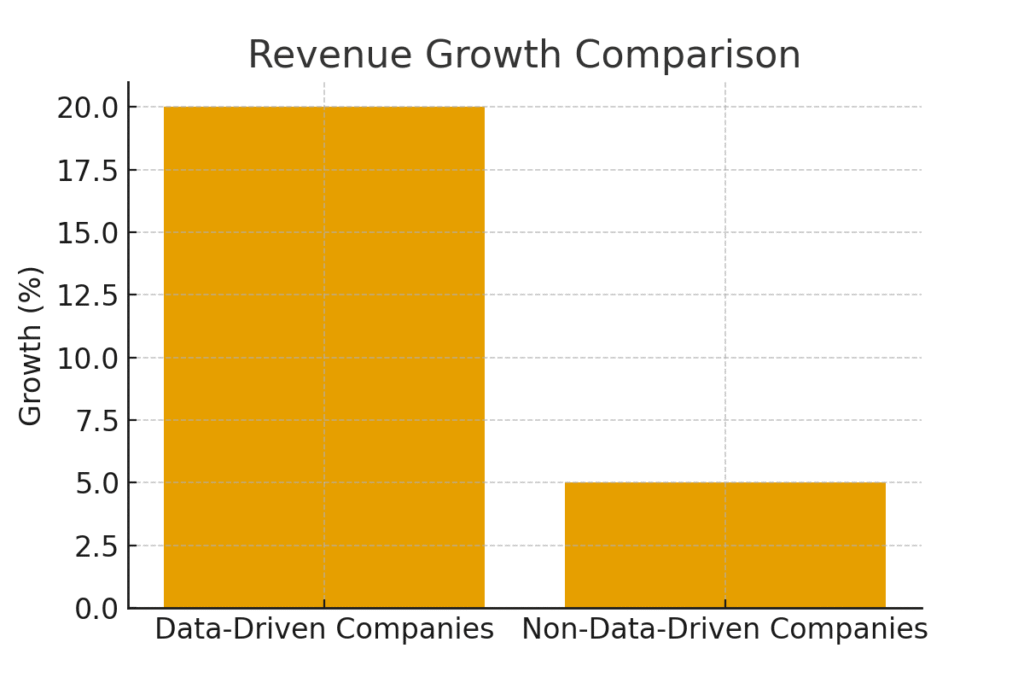
Research consistently shows that businesses that embrace data analysis significantly outperform their peers. According to McKinsey, data-driven organizations are 23 times more likely to acquire customers, 6 times more likely to retain customers, and 19 times more likely to be profitable. This proves that adopting analytics is not just an option it’s a competitive necessity.
The chart below compares revenue growth between data-driven and non-data-driven companies:
Case Example: Retailer Boosting Sales
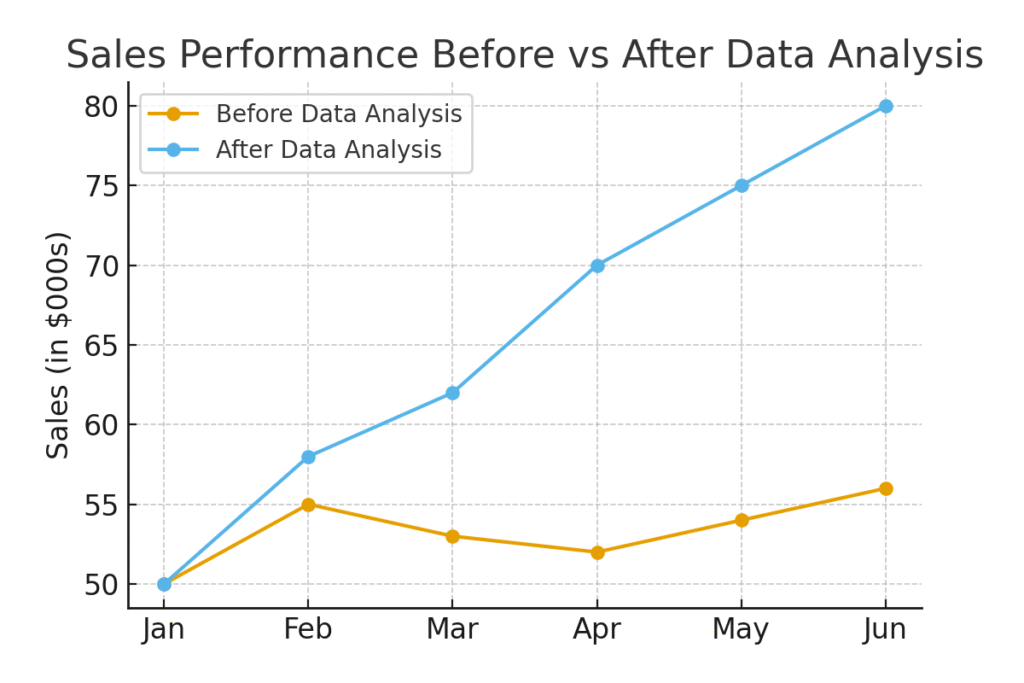
Consider a mid-sized retailer struggling with stagnating sales. After adopting data analysis, the company began tracking customer purchasing trends, seasonal demand, and competitor pricing. By implementing targeted promotions and optimizing inventory, they experienced a dramatic sales uplift. The sales data before and after the implementation is shown below:
Key Business Benefits of Data Analysis
Here are the top ways data analysis creates measurable business value:
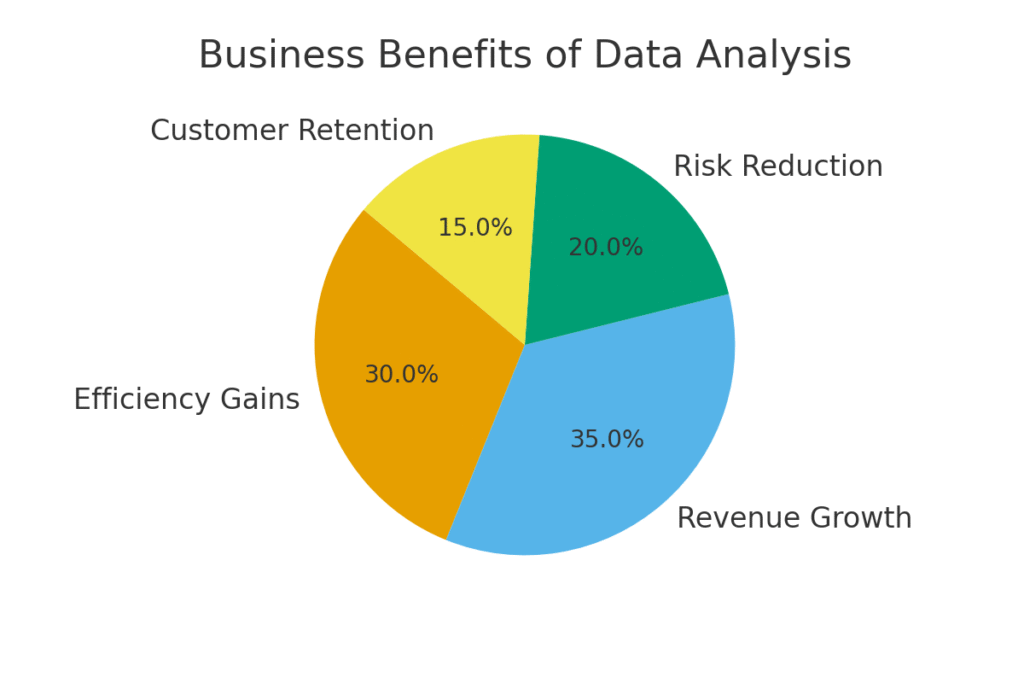
• Efficiency Gains: Optimize operations, reduce waste, and cut costs by identifying bottlenecks.
• Revenue Growth: Discover cross-selling opportunities, improve pricing models, and forecast demand.
• Risk Reduction: Detect fraud, anticipate market shifts, and make financially sound investments.
• Customer Retention: Personalize experiences, predict churn, and strengthen brand loyalty.
The impact of data analysis spans across multiple areas of business performance. While revenue growth is a major driver, companies also benefit from improved efficiency, reduced risks, and stronger customer retention, as shown in this distribution:
Final Takeaway
The evidence is clear: businesses that adopt data analysis achieve measurable improvements in growth, profitability, and efficiency. The earlier you start, the faster you see results.
Ready to harness the power of data for your business? Visit data.skillyet.com and schedule a free consultation today.